
The Apocrypha
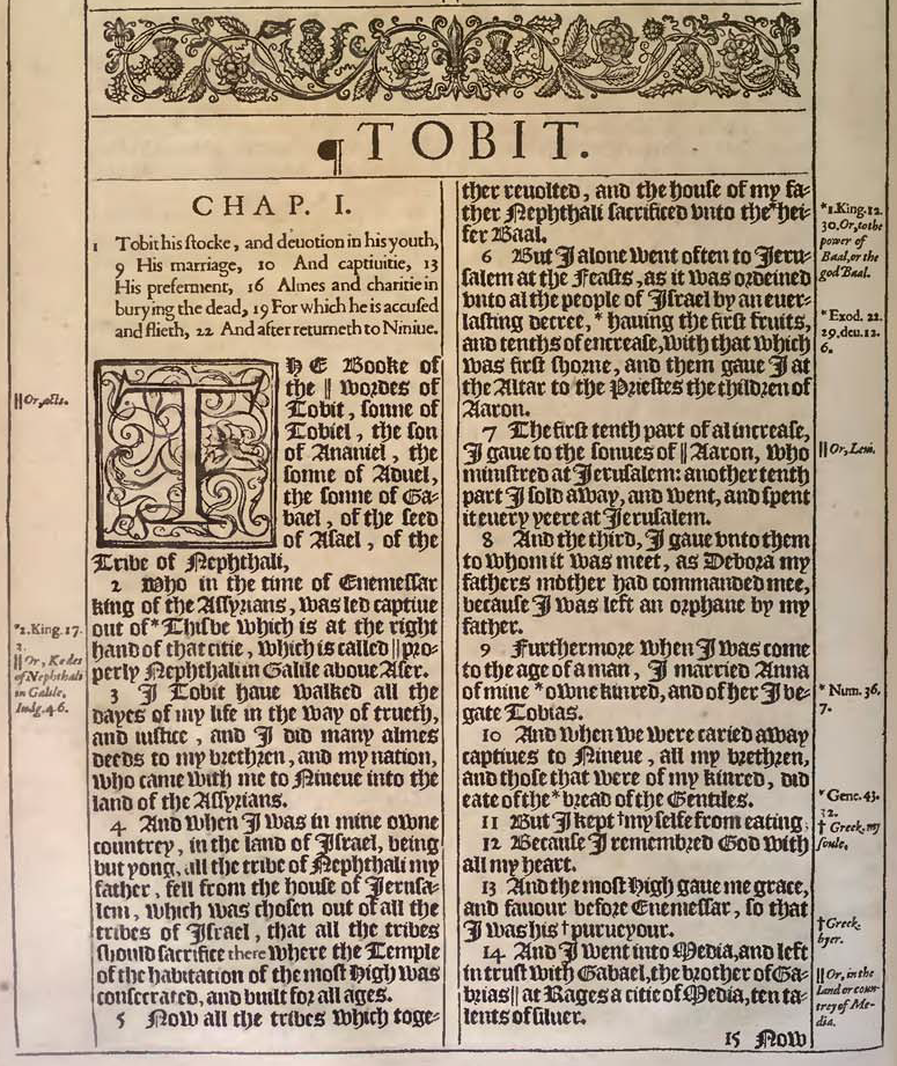
These ancient texts are normally found sandwiched between the old and new testaments of certain versions of the Bible. Most famously in the King James 1611 bible. Their value is seen as possibly true and good to read, however unverified and unequal to the holy scriptures. This status is given to them most famously by Martin Luther during the Protestant Reformation of 1517-1648.
They are found to be deuterocanonical—which means "second canon" in Greek. It usually means the parts of the Bible that are only used by some Christian churches (mostly Roman Catholic and Orthodox).
The Complete list of apocrypha are divided into Universal Deuterocanon, Eastern Orthodox Deuterocanon, Ethiopian Orthodox Deuterocanon, Jewish Legend, and Biblical Additions
Universal Deuterocanon
Tobit, Judith, Wisdom of Solomon, Sirach/Ecclesiasticus, Baruch, 1 Maccabees, 2 Maccabees,
eASTERN orthodox Deuterocanon
1 Esdras, 3 Maccabees , 4 Maccabees, Prayer of Manassas
ethiopian orthodox deuterocanon
Book of Enoch, 2 Esdras, Jubilees
jewish legend
Jasher
bIBLICAL ADDITIONS
The Rest of Esther, Psalm 151, The Additions to the Book of Daniel (Bel and the dragon & Susanna & song of the 3 holy children)
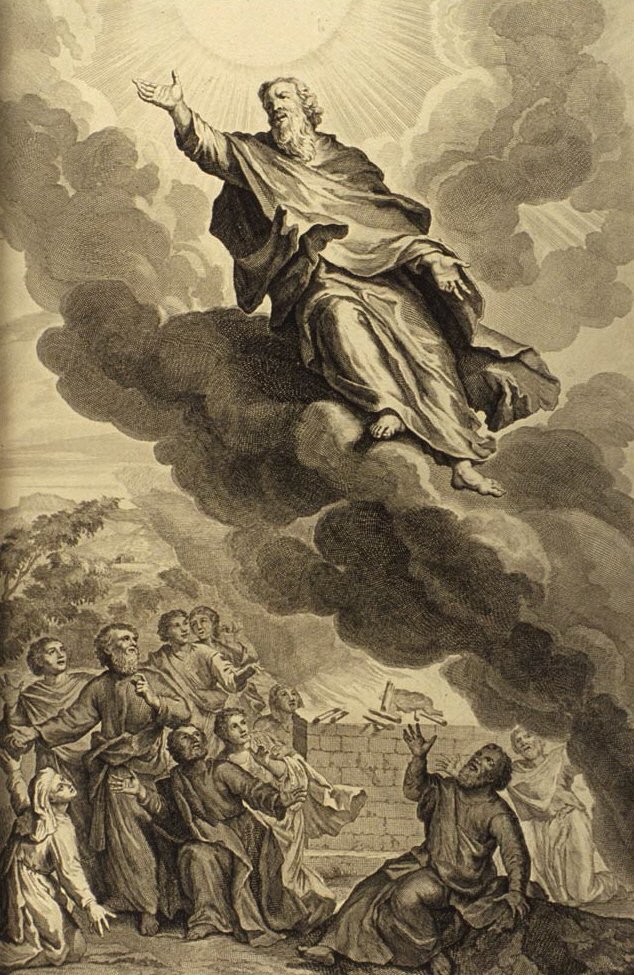
Universal DEUTEROCANON
tobit
Tobit was a good man who followed God's laws. He lived in a city called Nineveh. One day, Tobit went blind, and he became sad. He prayed to God for help. Meanwhile, in a faraway city, a girl named Sarah also prayed to God because she had bad luck in love. God heard both Tobit and Sarah's prayers.
God sent an angel named Raphael to help Tobit and Sarah. Raphael disguised himself as a man and met Tobit's son, Tobias. Tobias was going on a journey, so Raphael offered to guide him. Along the way, they faced many challenges, but with Raphael's help, they overcame them.
When they arrived in Sarah's city, Tobias fell in love with her. But Sarah had been cursed, and her previous husbands died on their wedding nights. Raphael advised Tobias on how to break the curse, and they successfully married.
Later, Raphael revealed his true identity to Tobit and Tobias. They were amazed and thanked God for sending Raphael to help them. Tobit's sight was restored, and they all lived happily ever after, knowing that God always listens to prayers and sends help when needed.
That's the story of Tobit, a tale of faith, courage, and God's mercy.
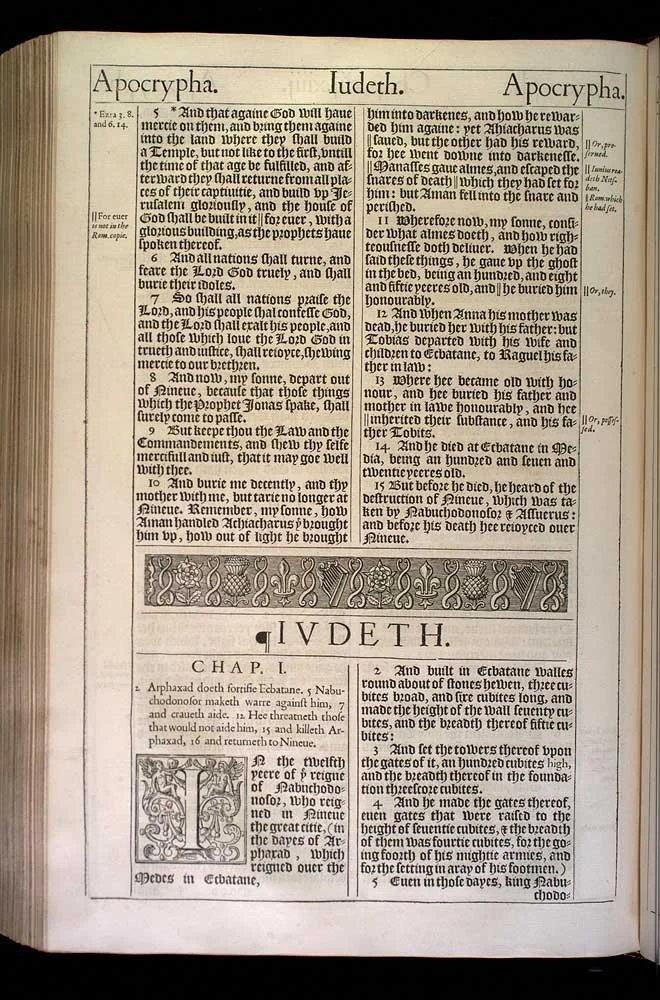
judith
The book of Judith tells the story of a courageous and wise woman named Judith who lived during a time of crisis for the Israelites. The powerful Assyrian army, led by General Holofernes, was threatening to destroy Judith's city, Bethulia.
Seeing her people's despair, Judith devised a daring plan to save them. She dressed herself in her finest clothes and went alone to the Assyrian camp. There, she gained the trust of General Holofernes, who was captivated by her beauty.
During a feast held in her honor, Judith waited until Holofernes had drunk too much wine and fallen into a deep sleep. Seizing the opportunity, she bravely took his sword and beheaded him. With the help of her maidservant, she then escaped from the camp, carrying Holofernes' head with her.
When the Assyrian army discovered their leader was slain, they fled in panic, and Bethulia was saved. Judith's heroic act became legendary, and her people praised her as their savior.
The story of Judith illustrates the power of courage, cunning, and faith in times of adversity. It shows that even in the face of overwhelming odds, one person's bravery and determination can make a difference and save an entire community.
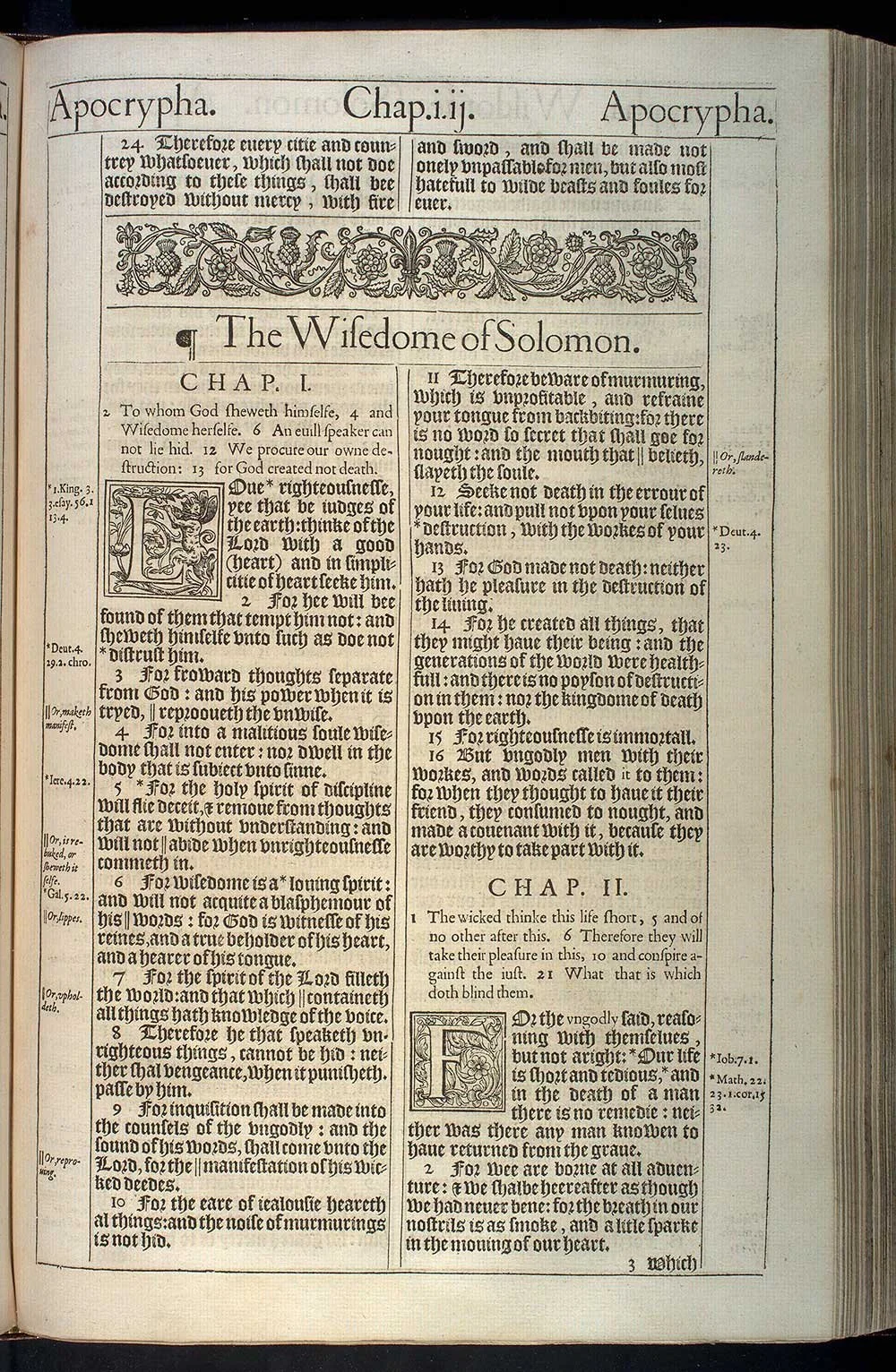
Wisdom of Solomon
The Book of Wisdom teaches that wisdom is essential for a fulfilling and righteous life. It begins by describing how wisdom is a gift from God and is accessible to all who seek it. Wisdom is portrayed as a guiding force that leads people to make good choices and live virtuously.
The book contrasts wisdom with foolishness, highlighting the benefits of seeking wisdom and the consequences of ignoring it. It emphasizes that wisdom brings happiness, prosperity, and inner peace, while foolishness leads to suffering, confusion, and destruction.
Wisdom is personified as a woman who calls out to humanity, inviting them to embrace her teachings and live according to God's will. She offers guidance on various aspects of life, including morality, justice, and the pursuit of truth.
The Book of Wisdom also addresses the nature of God, portraying Him as just, merciful, and compassionate. It emphasizes God's love for humanity and His desire for people to live in harmony with one another.
Throughout the book, the importance of righteousness and faithfulness to God's commandments is emphasized. It encourages readers to seek wisdom diligently, knowing that it will ultimately lead to a meaningful and fulfilling life.
In summary, the Book of Wisdom teaches that wisdom is a precious gift from God that guides people to make good choices and live virtuously. It emphasizes the importance of seeking wisdom and living in accordance with God's will for a fulfilling and righteous life.
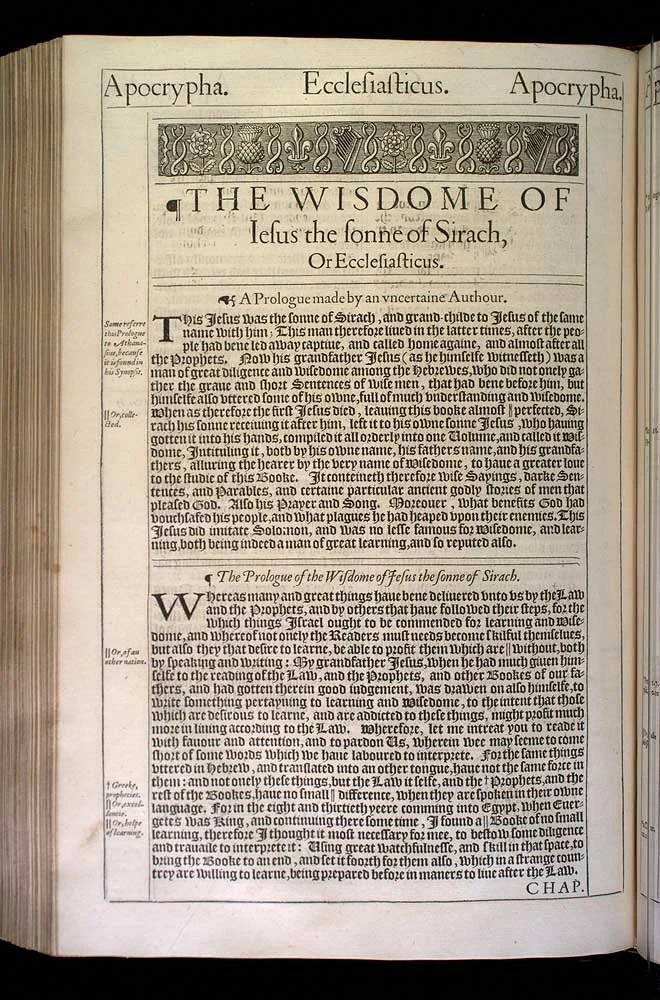
Ecclesiasticus/Sirach
The Book of Sirach, also known as Ecclesiasticus, is a collection of wise teachings and moral advice attributed to a Jewish sage named Jesus Ben Sirach. In Sirach, readers find practical guidance on various aspects of life, such as family relationships, friendship, work ethics, and finances. It emphasizes the importance of wisdom, which is portrayed as a gift from God that leads to righteous living. Sirach also contains reflections on the wonders of creation, the greatness of God, and the importance of seeking knowledge and understanding. Throughout the book, readers are urged to live virtuously, with integrity, humility, and compassion toward others. Sirach serves as a valuable source of timeless wisdom and practical advice for leading a meaningful and righteous life.
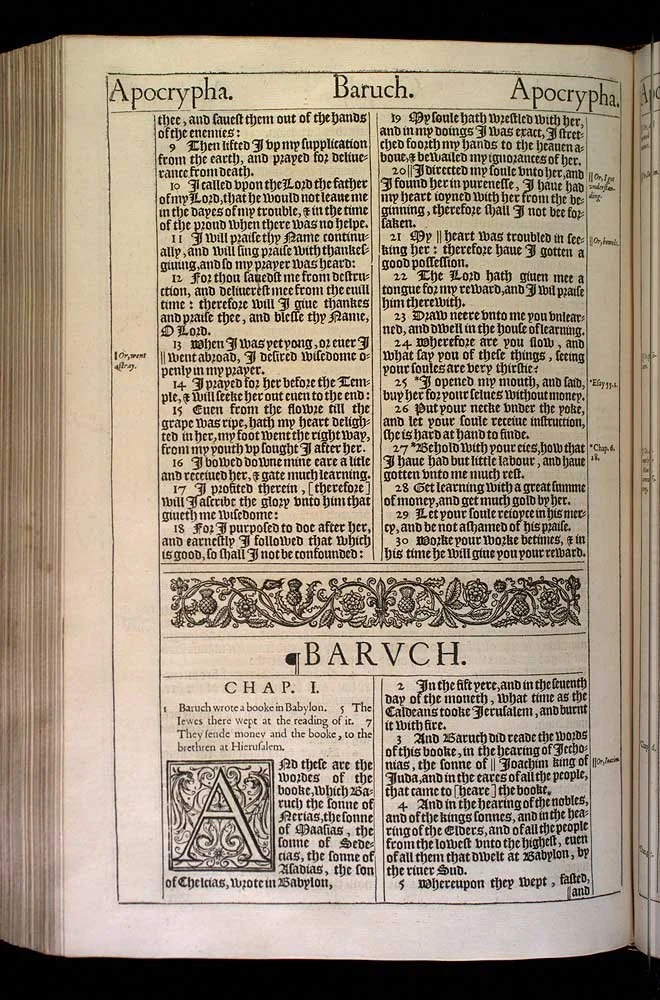
BARUCH
The Book of Baruch is a collection of writings attributed to Baruch, the scribe and companion of the prophet Jeremiah. It addresses the historical context of the Babylonian exile, offering exhortations to repentance, expressions of lamentation and confession, prophecies of restoration, and exhortations to wisdom and righteousness. Baruch emphasizes the rejection of idolatry and false gods while encouraging trust in God's faithfulness and promises. The book concludes with a final exhortation to remain faithful to God and to await His salvation with hope and perseverance. Overall, the Book of Baruch provides valuable insights into the spiritual struggles of the exiled Jewish community and offers timeless lessons about faith, repentance, and perseverance in the face of adversity.
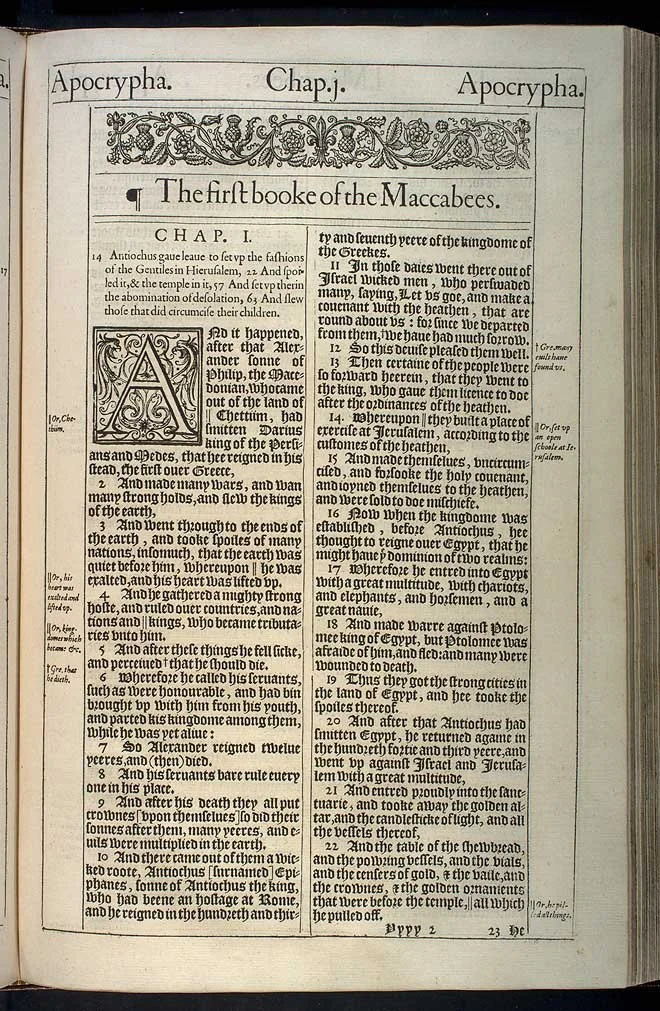
Maccabees 1
An ancient historical text that recounts the events surrounding the Jewish revolt against the Seleucid Empire in the 2nd century BCE. Here's a summary:
1. Background: The book begins with a brief overview of the political situation in Judea under the rule of the Seleucid Empire, particularly focusing on the reign of King Antiochus IV Epiphanes. Antiochus imposed Hellenistic practices and attempted to suppress Jewish religious observance, leading to widespread unrest among the Jewish population.
2. Revolt of Mattathias: The narrative then shifts to the story of Mattathias, an elderly Jewish priest who sparked the revolt against the Seleucid forces. Mattathias refused to participate in pagan sacrifices and killed a fellow Jew who complied with the king's orders. This act of defiance inspired others to join the rebellion.
3. Leadership of Judas Maccabeus: Following the death of Mattathias, his son Judas Maccabeus emerged as the leader of the Jewish revolt. Judas and his followers engaged in guerrilla warfare against the Seleucid forces, achieving several notable victories despite being outnumbered and outmatched.
4. Cleansing of the Temple: The highlight of the narrative is the successful recapture and purification of the Temple in Jerusalem by Judas Maccabeus and his forces. This event, known as the "Hanukkah" or "Dedication," is celebrated by Jews to this day as a symbol of religious freedom and national identity.
5. Continued Struggle: The book chronicles the ongoing battles between the Jewish rebels and the Seleucid army, as well as the diplomatic efforts to secure alliances with neighboring nations. Despite facing numerous challenges and setbacks, the Jewish rebels persevere in their fight for independence.
6. Death of Judas Maccabeus: The narrative concludes with the death of Judas Maccabeus in battle against the Seleucids. His brothers, Jonathan and Simon, assume leadership roles in the continuing struggle for Jewish independence.
In summary, the First Book of Maccabees is a historical account of the Jewish revolt against the Seleucid Empire, highlighting the courageous actions of Judas Maccabeus and his followers in defense of their religious and cultural heritage.
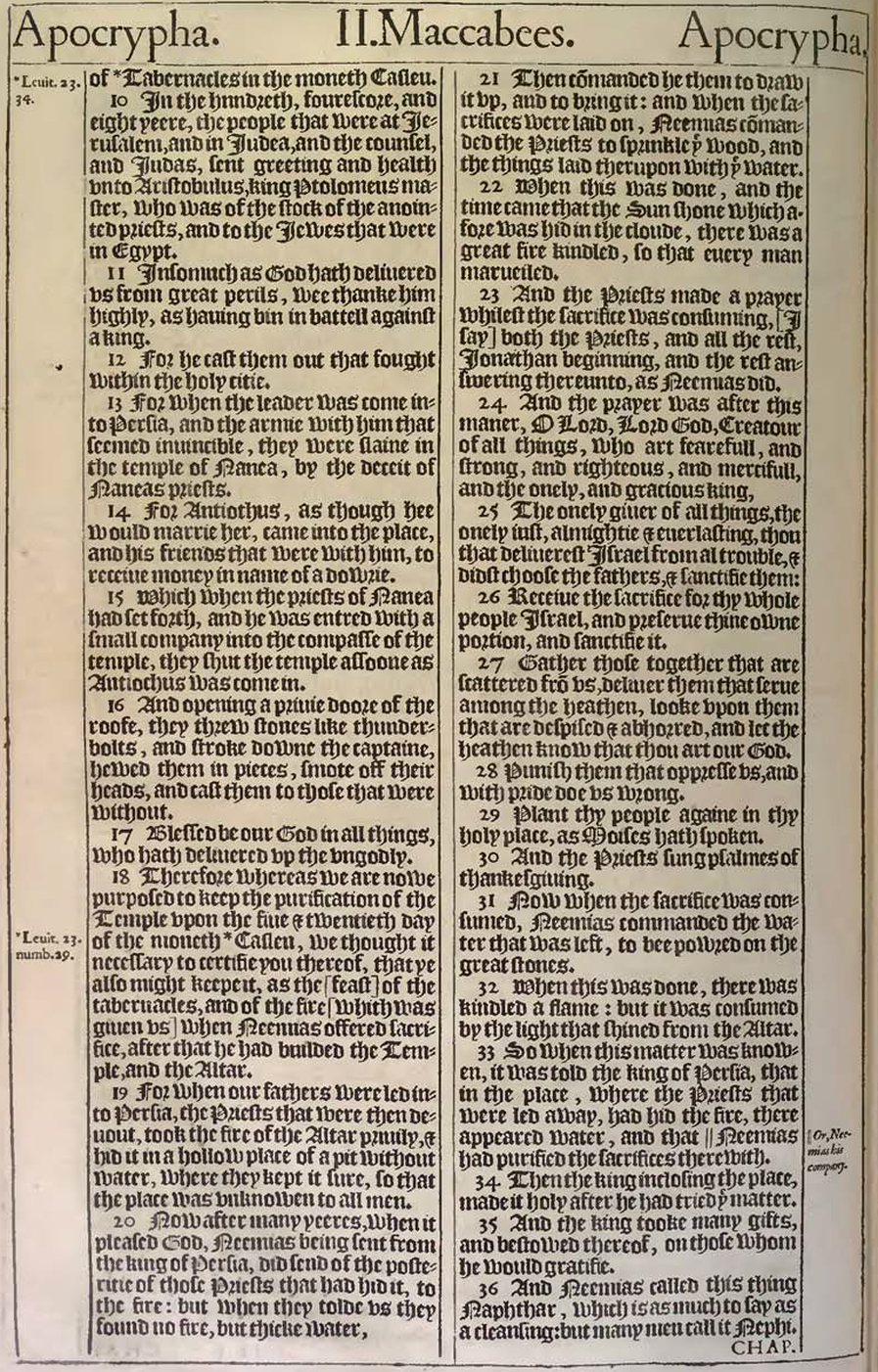
Maccabees 2
The Second Book of Maccabees continues the historical narrative of the Jewish revolt against the Seleucid Empire, building upon the events depicted in the First Book of Maccabees. It retells the struggle of the Jewish people against the oppressive rule of the Seleucid Empire under King Antiochus IV Epiphanes. The focus is on individual acts of martyrdom and heroism among the Jewish people, highlighting those who remained steadfast in their faith despite facing persecution and torture. Throughout the book, there are instances of divine intervention and providence, where God intervenes on behalf of the Jewish people in their struggle against their enemies. The book provides an account of the origins of the festival of Hanukkah, commemorating the rededication of the Temple in Jerusalem. It concludes with reflections on the significance of the events described and the importance of remembering and celebrating God's deliverance of the Jewish people.
eASTERN orthodox Deuterocanon
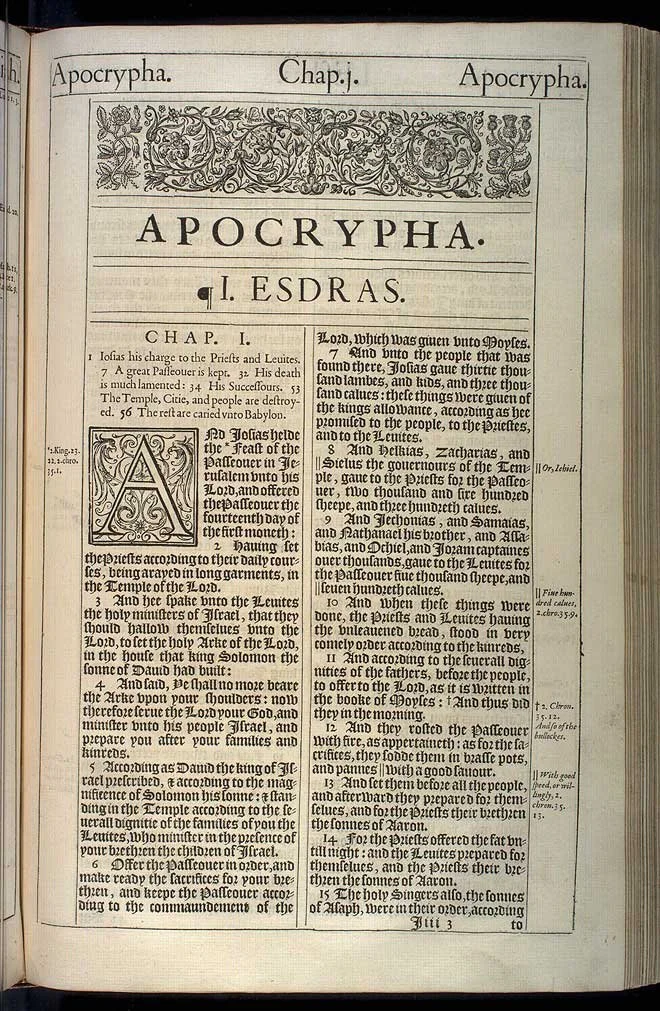
1 eSDRAS
1 Esdras provides an account of events surrounding the rebuilding of the Temple in Jerusalem after the Babylonian exile. The narrative includes stories about the Persian king Darius and his interactions with the Jewish people. It also features a competition among three young men to offer the king the best advice. Additionally, the book contains parallel accounts of certain events found in the biblical books of Ezra and Nehemiah, with some variations and additional details. Overall, 1 Esdras offers insights into the historical and religious context of the Jewish community during the post-exilic period under Persian rule.
Maccabees 3
3 Maccabees is an apocryphal book that tells the story of a persecution of Jews in Egypt during the reign of King Ptolemy IV Philopator. The narrative centers around the attempted forced Hellenization of the Jewish community in Alexandria. When the king orders the Jews to participate in a festival honoring the deity Dionysus, a group of faithful Jews, led by the high priest Eleazar, refuses to comply, choosing instead to remain loyal to their religious beliefs.
In retaliation, Ptolemy orders the imprisonment and torture of the Jewish population. However, through divine intervention, the Jews miraculously escape harm, and the king's plans are thwarted. The narrative emphasizes the power of prayer, faith, and divine protection in the face of persecution.
Overall, 3 Maccabees serves as a testament to the resilience and steadfastness of the Jewish people in the face of oppression, as well as an affirmation of divine intervention in times of crisis.
Maccabees 4
The book of 4 Maccabees, which is not included in the Hebrew Bible but is found in some Christian traditions, is a philosophical and moralistic work rather than a historical narrative like 1-3 Maccabees. It focuses on the story of Jewish martyrdom during the persecution under Antiochus IV Epiphanes, similar to the events depicted in 2 Maccabees.
4 Maccabees emphasizes the theme of virtue triumphing over adversity, particularly through the example of Jewish martyrs who endured torture and death rather than violate their religious beliefs. The text reflects on the power of reason, self-control, and piety in overcoming suffering and temptation.
The book includes philosophical discourses and reflections on the nature of virtue and the relationship between reason and emotion. It draws upon examples from Jewish history, particularly the Maccabean revolt, to illustrate its moral teachings.
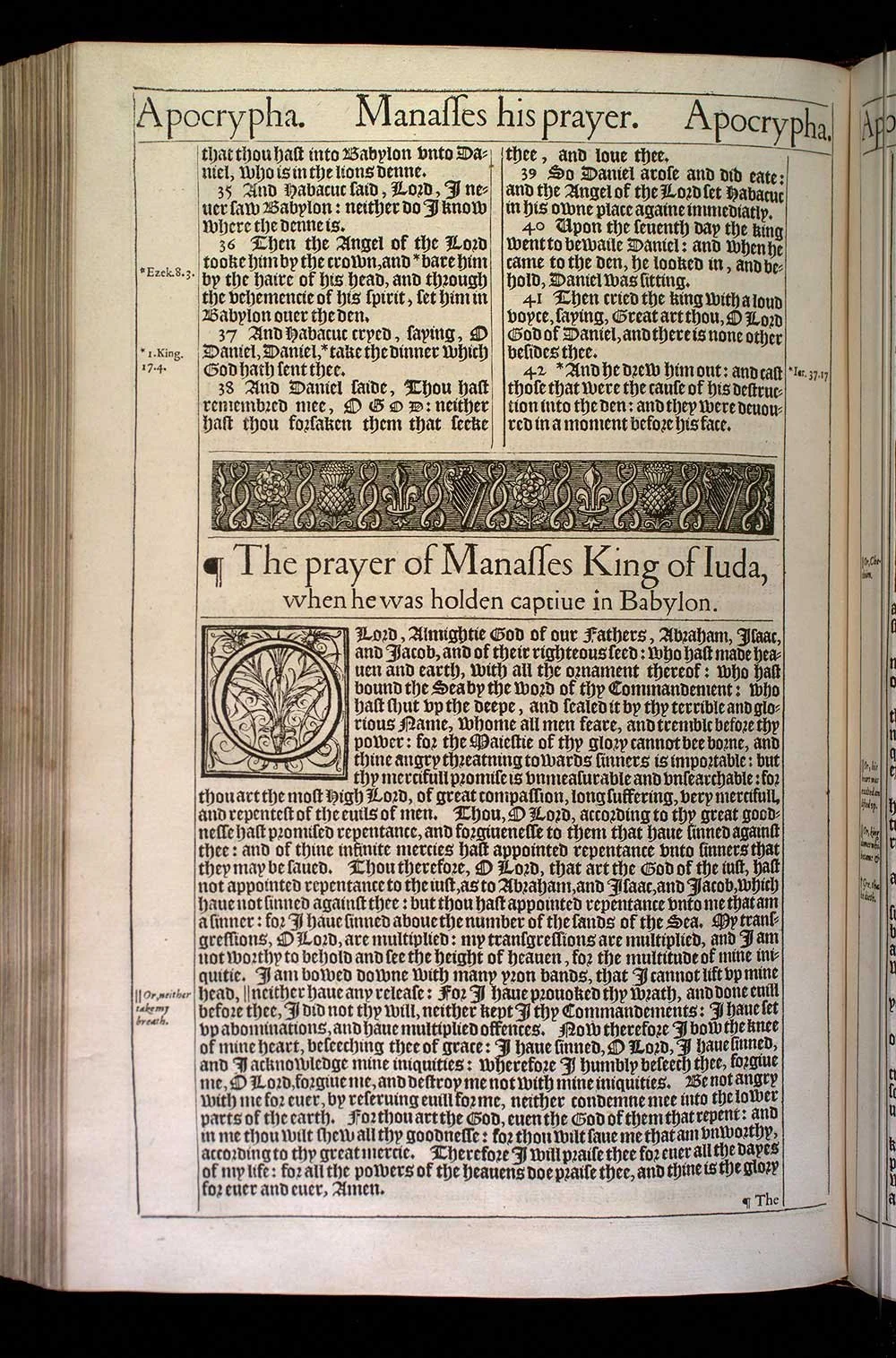
prayer of mANASSEH
The Prayer of Manasseh is a brief apocryphal text found in some versions of the Christian Old Testament. It is attributed to Manasseh, a king of Judah who reigned in the 7th century BCE. The prayer is presented as a confession of sins and a plea for forgiveness. Manasseh acknowledges his transgressions and expresses repentance, appealing to God's mercy and forgiveness. He praises God's righteousness and asks for deliverance from his enemies.
"O Lord, Almighty God of our fathers, Abraham, Isaac, and Jacob, and of their righteous seed; who hast made heaven and earth, with all the ornament thereof; who hast bound the sea by the word of thy commandment; who hast shut up the deep, and sealed it by thy terrible and glorious name; whom all men fear, and tremble before thy power; for the majesty of thy glory cannot be borne, and thine angry threatening toward sinners is importable: but thy merciful promise is unmeasurable and unsearchable; for thou art the most high Lord, of great compassion, longsuffering, very merciful, and repentest of the evils of men. Thou, O Lord, according to thy great goodness hast promised repentance and forgiveness to them that have sinned against thee: and of thine infinite mercies hast appointed repentance unto sinners, that they may be saved. Thou therefore, O Lord, that art the God of the just, hast not appointed repentance to the just, as to Abraham, and Isaac, and Jacob, which have not sinned against thee; but thou hast appointed repentance unto me that am a sinner: for I have sinned above the number of the sands of the sea. My transgressions, O Lord, are multiplied: my transgressions are multiplied, and I am not worthy to behold and see the height of heaven for the multitude of mine iniquities. I am bowed down with many iron bands, that I cannot lift up mine head, neither have any release: for I have provoked thy wrath, and done evil before thee: I did not thy will, neither kept I thy commandments: I have set up abominations, and have multiplied offences. Now therefore I bow the knee of mine heart, beseeching thee of grace. I have sinned, O Lord, I have sinned, and I acknowledge mine iniquities: wherefore, I humbly beseech thee, forgive me, O Lord, forgive me, and destroy me not with mine iniquities. Be not angry with me for ever, by reserving evil for me; neither condemn me to the lower parts of the earth. For thou art the God, even the God of them that repent; and in me thou wilt shew all thy goodness: for thou wilt save me, that am unworthy, according to thy great mercy. Therefore I will praise thee for ever all the days of my life: for all the powers of the heavens do praise thee, and thine is the glory for ever and ever. Amen."
ethiopian orthodox deuterocanon
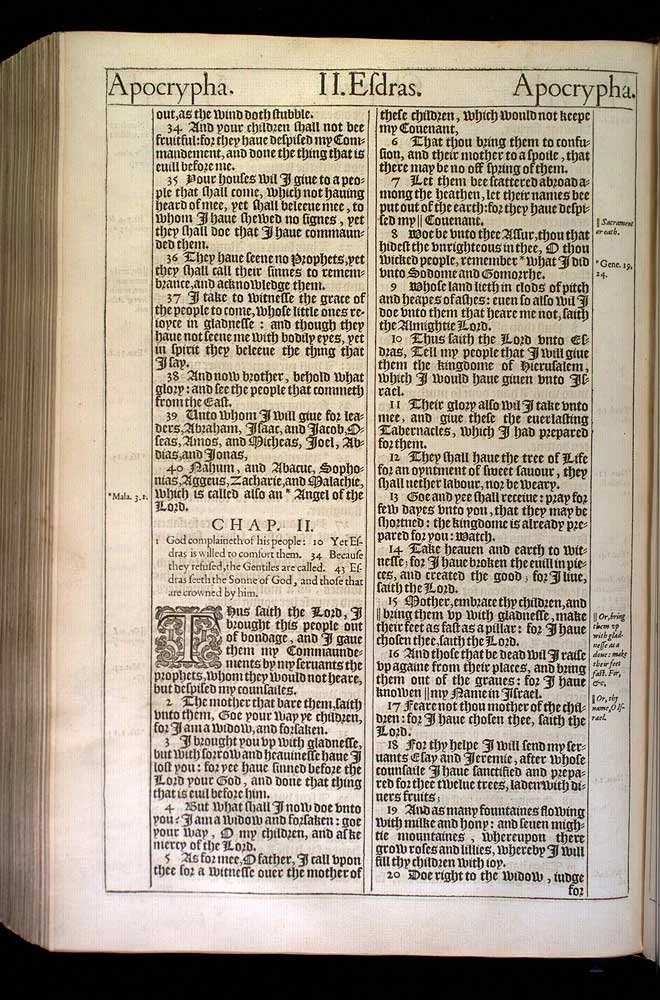
ESDRAS 2
Esdras 2, also known as 2 Esdras or 4 Ezra, is an apocryphal text included in some versions of the Christian Old Testament. It is attributed to the biblical figure Ezra and presents visions and prophecies concerning the fate of Israel and the end times.
The text begins with Ezra lamenting the destruction of Jerusalem and questioning God's justice. In response, he receives a series of visions from an angel, which provide insight into God's plan for humanity. These visions include allegorical representations of the history of Israel, symbolic imagery depicting the rise and fall of empires, and prophecies about the coming judgment and restoration.
Throughout Esdras 2, there is a strong emphasis on the themes of repentance, judgment, and redemption. Ezra intercedes on behalf of his people, pleading for God's mercy and forgiveness. The visions serve to encourage faithfulness and perseverance in the face of adversity, while also warning of the consequences of disobedience.
Overall, Esdras 2 serves as a theological reflection on the suffering of the Jewish people, the justice of God, and the hope of eventual restoration.
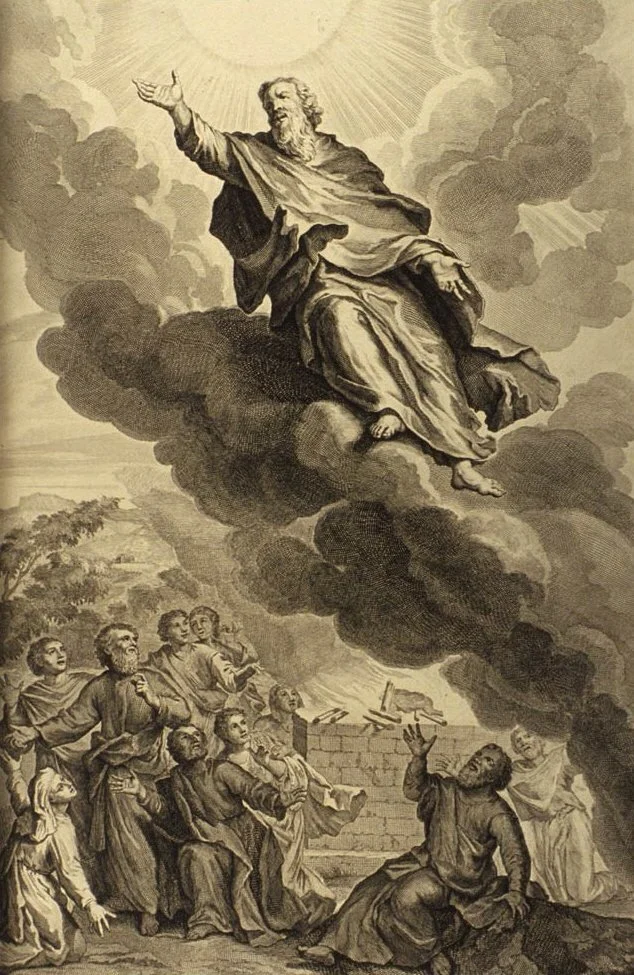
Book of Enoch
The Book of Enoch, also known as 1 Enoch, is an ancient Jewish apocalyptic text attributed to Enoch, the great-grandfather of Noah. It is not included in the canonical Bible but is regarded as canonical by the Ethiopian Orthodox Church. The book is divided into several sections, each offering a unique perspective on theological, cosmological, and ethical themes. Here's a detailed synopsis:
Book of Watchers (Chapters 1-36):
The Book of Watchers begins with Enoch's visions of heavenly beings, including angels, and his journey through the celestial realms.
Enoch encounters the fallen angels, known as the Watchers, who have descended to Earth and corrupted humanity by teaching them forbidden knowledge, including sorcery and warfare.
Enoch acts as an intermediary between God and the fallen angels, delivering messages of judgment and warning to both parties.
The section culminates in Enoch's journey to heaven, where he witnesses the judgment of the fallen angels and the fate of the righteous and the wicked.
Book of Parables or Similitudes (Chapters 37-71):
In this section, Enoch receives visions of future events, particularly the final judgment and the establishment of God's kingdom.
The visions contain allegorical representations of historical figures and nations, symbolizing their roles in the cosmic drama of good versus evil.
Enoch encounters the Son of Man, a messianic figure who will execute judgment and bring salvation to the righteous.
The Book of Parables emphasizes the themes of divine judgment, redemption, and the ultimate triumph of righteousness over evil.
Astronomical Book (Chapters 72-82):
This section focuses on Enoch's visions of the heavenly bodies, their movements, and their significance in determining the seasons and marking the passage of time.
Enoch learns about the cosmic order and the celestial laws governing the universe.
The Astronomical Book also contains teachings on astrology and the symbolic interpretation of heavenly phenomena.
Book of Dreams (Chapters 83-90):
Enoch recounts his dreams and visions, which include prophecies of future events, such as the Flood and the Messianic era.
The dreams contain allegorical imagery and symbolic representations of historical and eschatological events.
Enoch receives guidance and instruction from heavenly beings, preparing him for his role as a prophet and seer.
Epistle of Enoch (Chapters 91-108):
The Epistle of Enoch consists of Enoch's final words of exhortation and instruction to his descendants.
Enoch encourages his children to live righteous lives, obey God's commandments, and remain faithful in the face of temptation and persecution.
The epistle also contains prophecies of future events, including the coming of the Messiah and the final judgment.
Jubilees
The Book of Jubilees is an ancient Jewish text that offers a retelling of biblical history from Creation to the giving of the Torah at Mount Sinai. Written in the form of a historical narrative, it provides additional details, interpretations, and expansions on familiar biblical stories. Here's a synopsis of the key themes and contents:
Creation and Patriarchal History:
Jubilees begins with a detailed account of Creation, highlighting the importance of observing the Sabbath as a commemoration of God's rest.
It then delves into the lives of the patriarchs from Adam to Moses, offering additional information and insights not found in the canonical Bible. This includes details about Adam's reception of secret knowledge from angels, Noah's righteousness, and Abraham's observance of divine commandments.
Covenant and Law:
The book emphasizes the significance of observing divine laws and commandments, including dietary restrictions, festival observances, and regulations concerning purity and sacrifice.
It presents the covenant between God and humanity as an everlasting bond, with specific instructions for maintaining this covenantal relationship.
Angelic Mediation:
Jubilees introduces the concept of angelic mediation in human affairs, portraying angels as intermediaries between God and humanity.
Angels play a pivotal role in delivering messages, revealing hidden knowledge, and guiding the righteous in their obedience to divine commandments.
Calendar and Chronology:
The text provides a unique calendar system based on the number seven, with each year divided into weeks, months, and jubilees. This system is used to organize biblical history into distinct periods and cycles.
Jubilees also offers a chronological framework for biblical events, emphasizing the importance of keeping track of time according to divine mandates.
Eschatological Hope:
The book concludes with a vision of future redemption and restoration for Israel, underscoring the significance of righteousness and obedience in fulfilling God's ultimate purposes.
It instills hope for a future era of peace and prosperity, characterized by the reign of God's righteousness over all creation.
Jewish Legend
jasher
The "Book of Jasher" is an ancient text referenced in the Hebrew Bible, specifically in Joshua 10:13 and 2 Samuel 1:18. However, the exact content and authenticity of the Book of Jasher remain debated among scholars. There are several texts claiming to be the Book of Jasher, but none have been definitively proven to be the original book mentioned in the Bible.
One of the most well-known versions of the Book of Jasher is the "Sefer haYashar," which is an ancient Hebrew midrash (commentary) on the events in the Hebrew Bible, particularly from the time of creation to the conquest of Canaan under Joshua's leadership. However, this text is believed to have been composed much later than the events it describes and is considered by most scholars to be a medieval work rather than an ancient one.
Other texts claiming to be the Book of Jasher have also been circulated throughout history, but their authenticity is highly disputed.
biblical additions
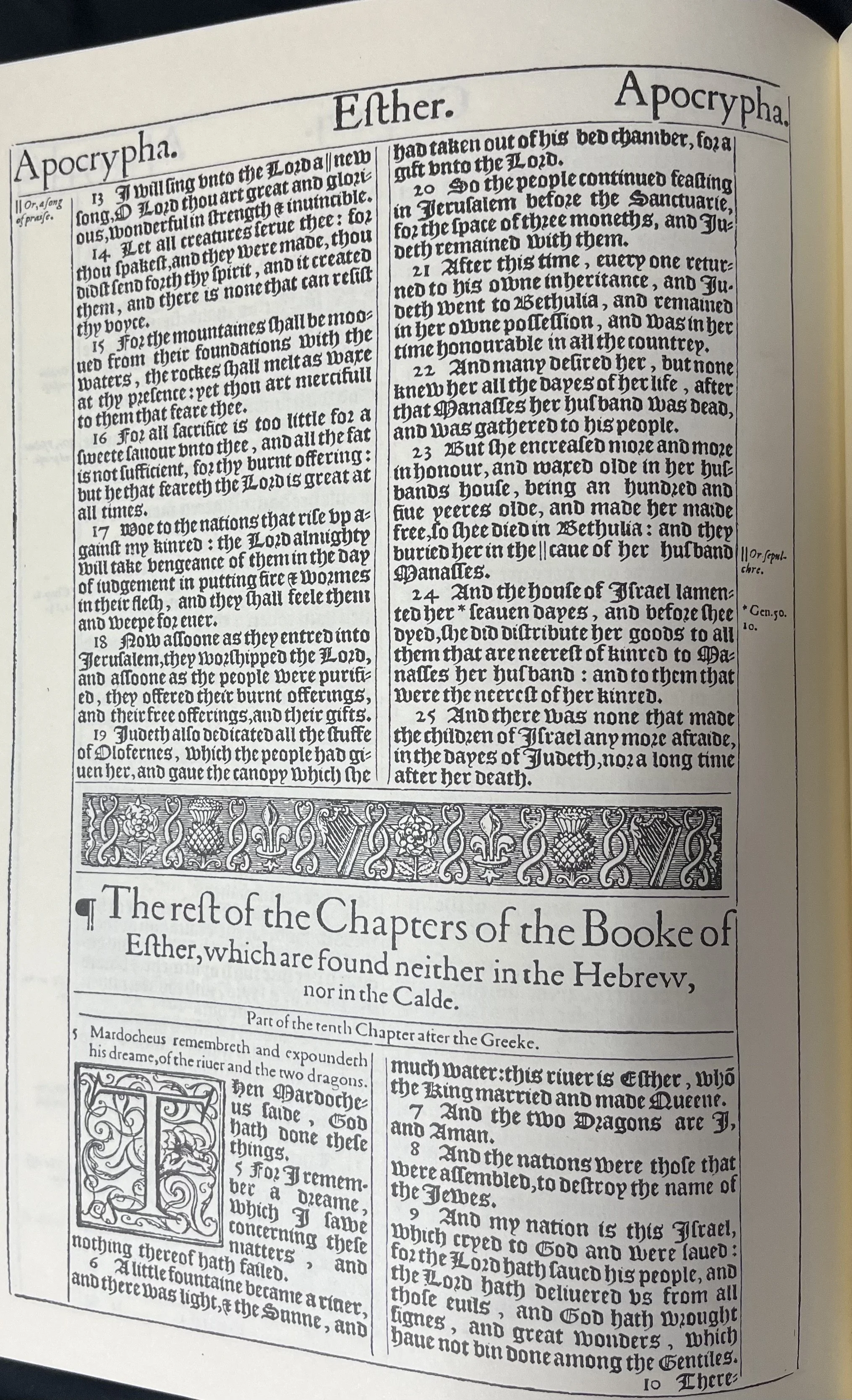
Rest Of Ester
Mordecai's Dream: The "Rest of Esther" begins with Mordecai, after his rise to power, having a dream that reveals a future plot against the Jews. He wakes up troubled by the dream and seeks divine guidance.
Mordecai's Prayer: Mordecai offers a fervent prayer to God, acknowledging God's sovereignty and asking for assistance in protecting his people from their enemies.
Esther's Prayer: Esther learns of Mordecai's distress and sends clothing for him to put on and a prayer shawl to wear. She also offers her own prayer to God, seeking strength and courage to intercede on behalf of her people before the king.
Esther's Audience with the King: Esther approaches the king, adorned in her royal attire, and finds favor in his sight. She invites him and Haman to a banquet she has prepared.
Haman's Plot: Haman, filled with pride, boasts to his friends and wife about his wealth and power, but his joy is marred by Mordecai's refusal to bow down to him. He plans to have Mordecai hanged on a gallows he has prepared.
The King's Sleeplessness: That night, the king suffers from insomnia and orders the chronicles of his reign to be read to him. He is reminded of Mordecai's earlier service in uncovering a plot against him, which had gone unrewarded.
Haman's Humiliation: The king seeks advice on how to honor someone deserving of recognition, and Haman, thinking the king is referring to him, suggests a grand gesture of honor. Instead, the king instructs Haman to bestow these honors upon Mordecai.
Haman's Downfall: Haman, humiliated and furious, returns home to his wife and friends, who predict his downfall. As he is about to be summoned to Esther's banquet, his fate is sealed.
Esther's Revelation: At the banquet, Esther reveals her Jewish identity to the king and exposes Haman's plot to annihilate her people.
Haman's Punishment: The king orders Haman to be hanged on the same gallows he had prepared for Mordecai, and Mordecai is given Haman's position of authority.
The Jews' Victory: With Mordecai's support and the king's decree allowing the Jews to defend themselves, they triumph over their enemies throughout the kingdom.
Establishment of Purim: Mordecai and Esther establish the festival of Purim to commemorate their deliverance, and it becomes an annual celebration among the Jewish people.
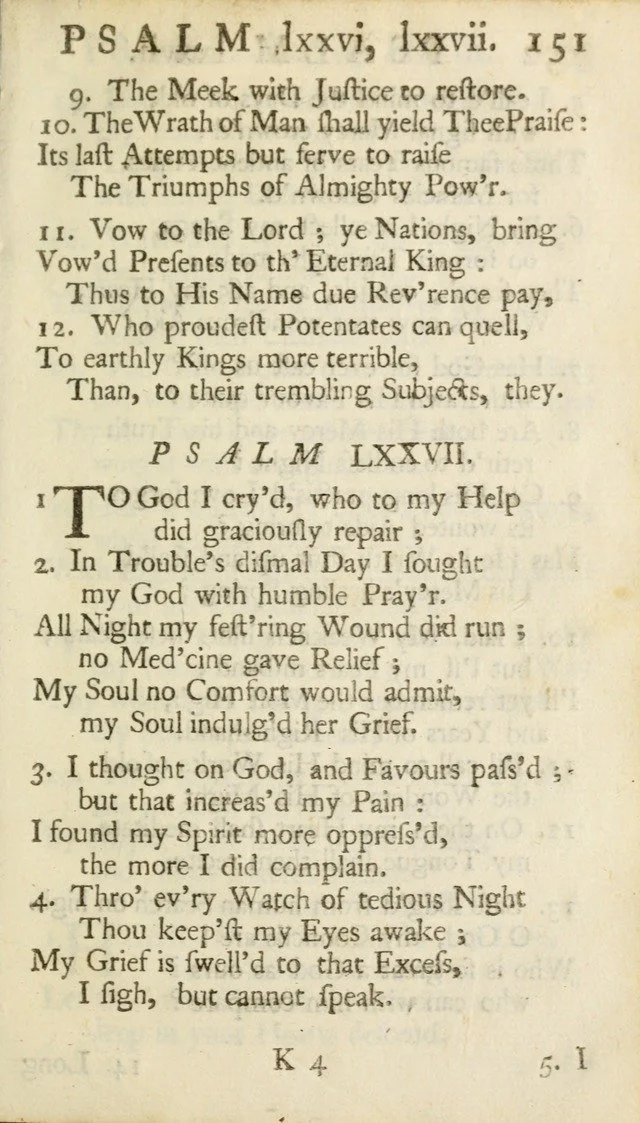
Psalm 151
I was small among my brothers, and the youngest in my father’s house; I tended my father’s sheep.
My hands made a harp; my fingers fashioned a lyre.
And who will tell my Lord? The Lord himself; it is he who hears.
It was he who sent his messenger and took me from my father’s sheep, and anointed me with his anointing oil.
My brothers were handsome and tall, but the Lord was not pleased with them.
I went out to meet the Philistine, and he cursed me by his idols.
But I drew his own sword; I beheaded him, and took away disgrace from the people of Israel.
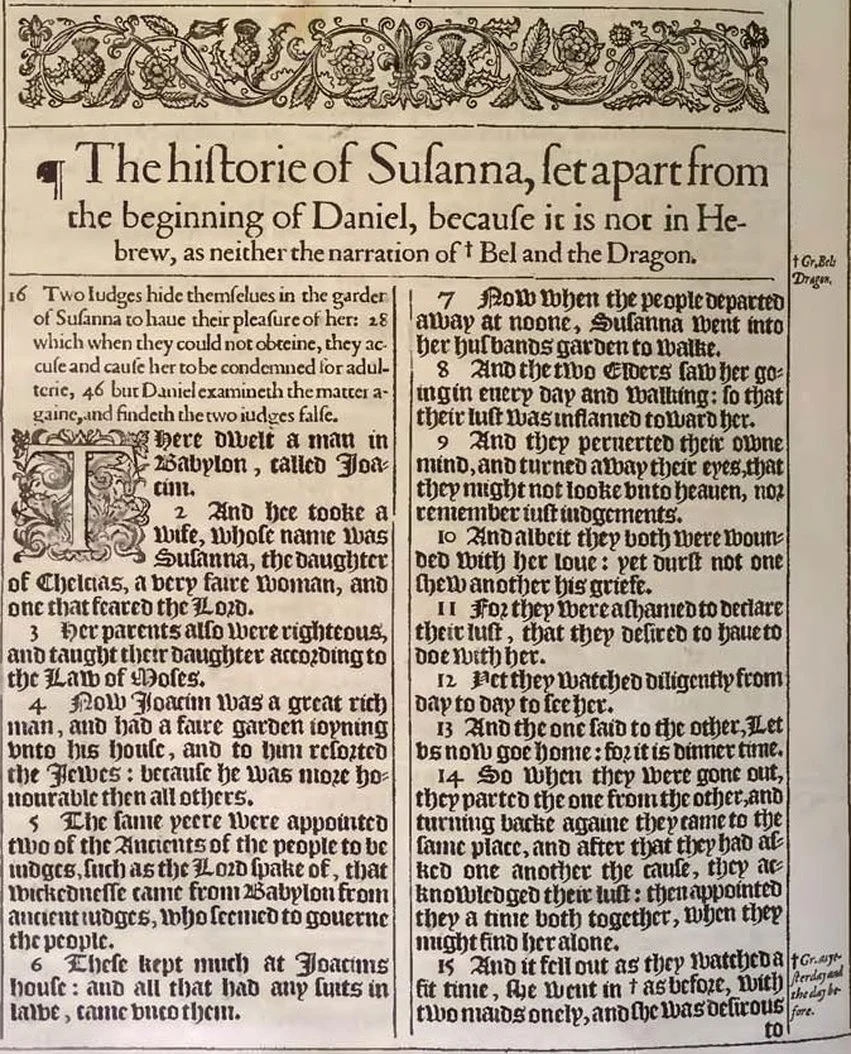
Susanna
It tells the story of Susanna, a virtuous woman who is falsely accused of adultery by two elders in her community. Here's a summary of the Book of Susanna:
Introduction of Susanna: Susanna is introduced as a righteous woman married to Joakim, a respected man in the community.
False Accusation: Two elders in the community, who hold positions of authority, become infatuated with Susanna's beauty. They conspire to seduce her and threaten to accuse her of adultery if she refuses their advances.
Susanna's Dilemma: Susanna finds herself in a difficult situation, torn between obeying the elders' demands and remaining faithful to her husband and God. She ultimately chooses to remain faithful and rejects the elders' advances.
Trial and Judgment: The elders carry out their threat and accuse Susanna of adultery, bringing her to trial before the community. Despite her protests of innocence, the elders' testimony holds weight due to their respected positions.
Divine Intervention: In a moment of desperation, Susanna cries out to God for help. The young prophet Daniel, who is present in the crowd, is moved by the Spirit of God to intervene and defend Susanna.
Exposure of False Witnesses: Through a series of questions, Daniel exposes the elders' deceitful testimony and reveals inconsistencies in their accusations. The elders are condemned for their false witness, and Susanna is vindicated.
Justice Prevails: The elders are put to death for their false accusation, and Susanna is declared innocent. Her reputation is restored, and she is honored for her righteousness and faithfulness.
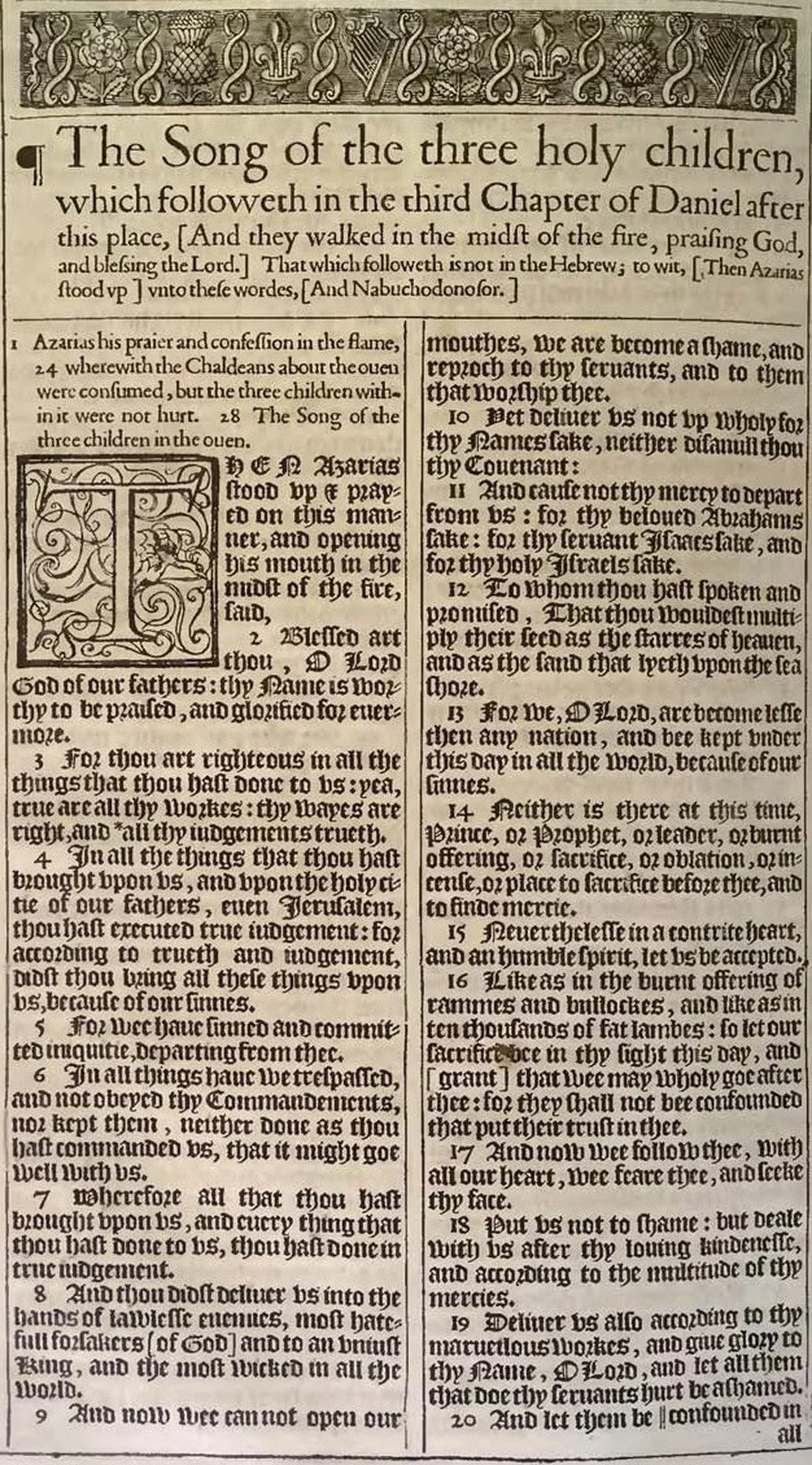
The song of the 3 holy children
The Song of the Three Holy Children, also known as the Benedicite, is a part of the Book of Daniel in some versions of the Bible. It appears as a prayer of praise and thanksgiving within the narrative of the fiery furnace episode involving Shadrach, Meshach, and Abednego, who were thrown into the furnace for refusing to worship King Nebuchadnezzar's golden image.
Here's a summary of the Song of the Three Holy Children:
Invocation and Praise: The three young men, Shadrach, Meshach, and Abednego, start by calling upon all creation to join them in praising God. They invite the sun, moon, stars, and all elements of nature to join in this hymn of praise.
Praise for Creation: The song continues with the praise of various aspects of creation, such as the heavens, the waters above the heavens, the angels, the powers of the Lord, the sun, moon, and stars. Each element of creation is called upon to glorify God.
Praise for Deliverance: The young men give thanks for their deliverance from the fiery furnace by the angel of the Lord, who protected them from harm. They recount how they were cast into the flames but emerged unharmed because of their faithfulness to God.
Confession of Sins: Amidst their praise and thanksgiving, the three young men acknowledge their sins and the sins of their people. They recognize God's righteousness and mercy, even in the face of their transgressions.
Prayer for Deliverance: The song concludes with a prayer for deliverance from their enemies and a plea for God's mercy and forgiveness. They express their trust in God's justice and plead for His intervention on behalf of His people.
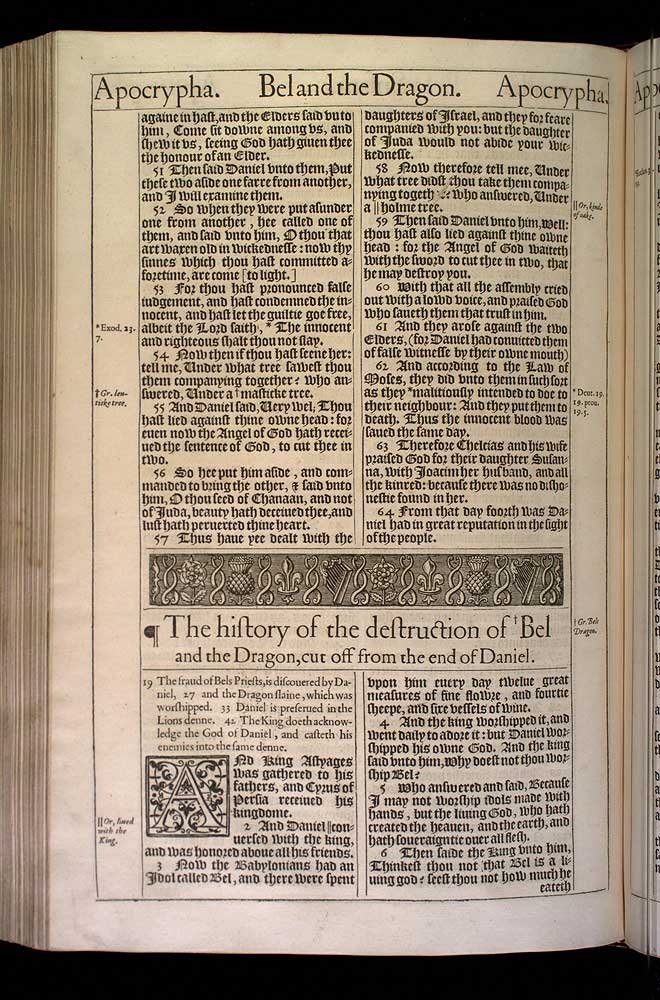
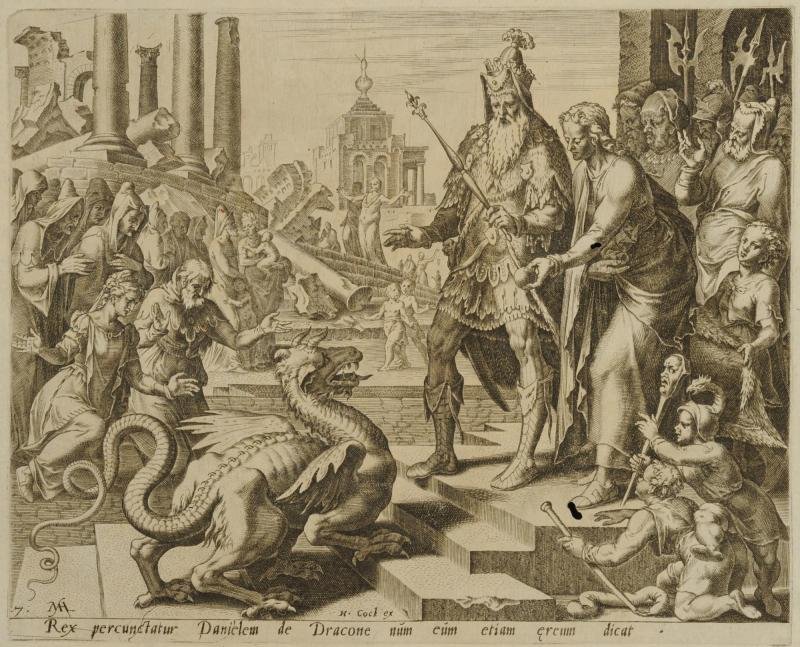
Bel and the Dragon
The story of Bel and the Dragon is found in the Apocrypha, specifically in the extended version of the Book of Daniel. It is included in some versions of the Bible, particularly in the Catholic and Orthodox Christian Old Testaments. Here's a summary of Bel and the Dragon:
Introduction: Bel and the Dragon is divided into two main sections, each recounting a separate tale involving Daniel's encounters with false idols and deception.
Bel: In the first section, King Cyrus, impressed by the piety of Daniel, entrusts him with the task of overseeing the worship of the idol Bel (also known as Baal). Bel is a large statue that the Babylonians worship as a god, and they claim that the food offerings left before the idol are consumed by the deity overnight.
Daniel's Investigation: Daniel, suspicious of the idolatrous practices, devises a plan to expose the deception. He secretly sprinkles ashes on the temple floor before Bel and locks the doors to the temple.
Exposure of Deception: The next morning, Daniel reveals the footprints of the priests and their families who had entered the temple through a secret entrance to consume the food offerings left for Bel. King Cyrus witnesses the deception and orders the execution of the idol's priests, as well as the destruction of the idol itself.
The Dragon: In the second section, Daniel confronts another false deity, this time a living creature worshipped by the Babylonians as a dragon. The people offer it daily sacrifices, but Daniel challenges their beliefs by feeding it a mixture of pitch, fat, and hair, causing the dragon to burst open and die.
Daniel's Survival: The Babylonians become enraged and demand Daniel's execution for blasphemy, but Daniel attributes his survival to his faith in the living God. The king, recognizing the superiority of Daniel's God, acknowledges Daniel's innocence and orders the execution of those who had deceived him.
New testament apocrypha
For lack of better words, this really gets in the weeds as “New Testament Apocrypha” is extra subjective, and extra expansive, and extra controversial compared to the Old Testament. Nevertheless here is the information I have found.
The New Testament Apocrypha refers to a collection of ancient texts that were not included in the canonical New Testament but were still circulated among early Christian communities. These texts include a variety of genres, such as gospels, acts, epistles, and apocalypses, and they offer alternative perspectives on the life and teachings of Jesus Christ and the early Christian movement. While some of these texts were considered sacred or authoritative by certain Christian groups, they were eventually excluded from the mainstream Christian canon.
Here are some examples of texts commonly included in the New Testament Apocrypha:
Gospel of Thomas: This collection of sayings attributed to Jesus is found among the Nag Hammadi library, discovered in Egypt in 1945. It contains 114 sayings, many of which are unique and not found in the canonical gospels.
Gospel of Mary: This text presents Mary Magdalene as a prominent disciple of Jesus and contains dialogues between Jesus and his disciples. It was discovered in the late 19th century and is part of the Berlin Codex.
Infancy Gospel of Thomas: This text provides accounts of Jesus' childhood miracles and exploits, including stories of him shaping birds out of clay and bringing them to life. It dates to the 2nd century.
Acts of Paul and Thecla: This work narrates the adventures of Paul the Apostle and Thecla, a female follower of Paul. It highlights Thecla's dedication to chastity and her miraculous escapes from persecution.
The Gospel of Judas: This text, discovered in the 1970s and published in 2006, presents Judas Iscariot in a more positive light, suggesting that his betrayal of Jesus was done at Jesus' request as part of a divine plan.
The Acts of Peter: This text contains accounts of Peter's miracles, conflicts with Simon Magus, and eventual martyrdom. It provides insights into early Christian beliefs and practices.
The Apocalypse of Peter: This apocalyptic text describes visions of heaven, hell, and the afterlife, as revealed to Peter by Jesus. It contains vivid descriptions of punishments for sinners and rewards for the righteous.
The Gospel of Philip: This text contains teachings and dialogues attributed to Jesus and his disciples, including reflections on the nature of salvation, the role of baptism, and the relationship between male and female.
The Gospel of the Ebionites: This gospel is believed to have been used by a Jewish Christian sect known as the Ebionites. It emphasizes Jesus' Jewish identity and presents him as a human prophet rather than as divine.
The Epistle of Barnabas: This letter, traditionally attributed to Barnabas, a companion of Paul, contains exhortations to Christian living and reflections on the Old Testament law and its fulfillment in Christ.
The Acts of John: This text contains accounts of the travels, miracles, and teachings of the apostle John, including his encounters with Jesus and his experiences after Jesus' death.
The Acts of Andrew: Similar to the Acts of John, this text narrates the adventures and missionary activities of the apostle Andrew, including his travels and encounters with various people.
The Gospel of Thomas the Contender: This text, found among the Nag Hammadi Library, presents additional sayings and teachings attributed to Jesus, along with reflections on salvation and the nature of reality.
The Gospel of Peter: This text provides an alternative account of the crucifixion and resurrection of Jesus, including details not found in the canonical gospels, such as the appearance of a giant walking cross.
The Secret Gospel of Mark: This fragmentary text, attributed to Mark the Evangelist, contains additional stories and teachings of Jesus, including encounters with a young man who receives secret teachings from Jesus.
The Shepherd of Hermas: This text consists of visions and allegorical teachings received by a character named Hermas, who undergoes spiritual transformation and learns about repentance, forgiveness, and the nature of the church.
The Epistle of Clement to the Corinthians: This letter, attributed to Clement of Rome, provides instructions and exhortations to the Christian community in Corinth, addressing issues of leadership, unity, and discipline.
The Apocalypse of Paul: This apocalyptic text recounts the journey of the apostle Paul through the heavens, where he receives visions of paradise and hell and encounters various heavenly beings.
The Apocalypse of Thomas: This text describes visions and revelations received by the apostle Thomas, including insights into the end times, judgment, and the fate of souls.
The Acts of Peter and Paul: This work narrates the ministry and martyrdom of both Peter and Paul, highlighting their miracles, conflicts with opponents, and eventual deaths as martyrs.
The Gospel of Nicodemus (or Acts of Pilate): This text contains accounts of Jesus' trial, crucifixion, and resurrection from the perspective of Nicodemus, a Pharisee, and other characters involved in the events. It also includes a descent into Hades by Jesus after his death.
The Acts of Thomas: This work narrates the missionary activities and miracles of the apostle Thomas in India, including his encounters with various individuals and his eventual martyrdom.
The Acts of Philip: Similar to the Acts of Thomas, this text focuses on the missionary activities and miracles of the apostle Philip, including his encounters with Simon Magus and his ministry in various locations.
The Epistle of Polycarp to the Philippians: This letter, attributed to Polycarp of Smyrna, provides instructions and exhortations to the Christian community in Philippi, offering insights into early Christian theology and practice.
The Gospel of Bartholomew: This text contains teachings and revelations attributed to the apostle Bartholomew, including insights into the nature of sin, salvation, and the afterlife.
The Gospel of Matthias: This gospel presents additional teachings and sayings attributed to the apostle Matthias, including reflections on the nature of discipleship and the kingdom of God.
The Epistle of Ignatius to the Smyrnaeans: This letter, attributed to Ignatius of Antioch, provides instructions and encouragement to the Christian community in Smyrna, addressing issues of martyrdom, unity, and false teachings.
The Acts of John the Theologian: This text contains accounts of the miracles, teachings, and travels of the apostle John, highlighting his encounters with Jesus and his experiences after Jesus' death.
The Apocalypse of John (or Revelation of John): While the canonical Book of Revelation is included in the New Testament, there are also several apocryphal texts attributed to John that offer alternative visions and interpretations of the end times and the coming of Christ.
The Preaching of Peter: This text contains sermons attributed to the apostle Peter, addressing various theological and ethical topics, and emphasizing repentance and the forgiveness of sins.
The Epistle of Jude (not to be confused with the canonical Epistle of Jude): This letter, attributed to Jude, the brother of James, provides exhortations and warnings against false teachers and immoral behavior within the Christian community.
The Apocalypse of Peter (different from the aforementioned Apocalypse of Peter): This text contains visions and revelations received by Peter, including descriptions of heaven, hell, and the fate of sinners and the righteous.
The Acts of Thomas (another variation): This version of the Acts of Thomas differs from the one previously mentioned, providing additional details about Thomas's missionary activities and encounters with various individuals.
The Gospel of Peter (distinct from the previous Gospel of Peter): This gospel offers an alternative account of the crucifixion and resurrection of Jesus, including different details and perspectives from the canonical gospels.
The Second Epistle of Clement: This letter, attributed to Clement of Rome, provides instructions and exhortations to the Christian community, emphasizing humility, obedience, and the importance of faith and good works.
The Acts of Peter and Andrew: This work narrates the ministry and martyrdom of both Peter and Andrew, including their travels, miracles, and confrontations with opponents of the Christian faith.
The Acts of Andrew and Matthias: This text focuses on the missionary activities of the apostles Andrew and Matthias, including their travels, miracles, and interactions with various people.
The Secret Book of James: This text contains teachings and revelations attributed to James, the brother of Jesus, including insights into spiritual wisdom, prayer, and the nature of the soul.
The Gospel of the Twelve Apostles (or Leucius Acts): This text presents accounts of the apostles' activities and miracles, including their preaching, healings, and confrontations with opponents of the Christian faith.
The Acts of John by Prochorus: This work narrates the missionary activities of the apostle John, focusing on his travels, miracles, and encounters with various individuals and communities.
The Acts of Peter and Paul by Pseudo-Marcellus: Similar to other Acts of the Apostles, this text contains accounts of the ministry and martyrdom of both Peter and Paul, highlighting their teachings, miracles, and conflicts with opponents.
The Acts of Peter and Paul by Pseudo-Abdias: Another text with a similar title, this work also narrates the activities of Peter and Paul, including their travels, miracles, and eventual deaths as martyrs.
The Epistle to the Laodiceans: This letter, attributed to Paul, contains greetings and exhortations to the Christian community in Laodicea, along with instructions for sharing the letter with the neighboring church in Colossae.
The Correspondence of Paul and Seneca: This collection of letters presents fictional exchanges between the apostle Paul and the Roman philosopher Seneca, addressing various philosophical and theological topics.
The Gospel of Pseudo-Matthew: This gospel provides additional details about the childhood of Jesus, including stories of his interactions with other children, his miracles, and his family's flight to Egypt.
The Narrative of Joseph of Arimathea: This text recounts the journey of Joseph of Arimathea to Britain, where he is said to have brought Christianity and established churches.
The Epistle to the Corinthians (3 Corinthians): This letter, attributed to Paul, addresses issues of discipline and reconciliation within the Corinthian church, providing instructions and exhortations to the congregation.
The Acts of Andrew by Pseudo-Abdias: This work narrates the missionary activities of the apostle Andrew, including his travels, miracles, and interactions with various individuals and communities.
The Epistle of the Apostles: This letter presents teachings and exhortations attributed to Jesus and his apostles, addressing various ethical and theological topics relevant to early Christian communities.
The Acts of Philip by Pseudo-Abdias: This work narrates the missionary activities of the apostle Philip, including his travels, miracles, and interactions with various individuals and communities.
The Acts of John by Prochorus (Another version): This text is another variation of the Acts of John, presenting additional accounts of the apostle John's activities and teachings.
The Acts of John and Paul: This work narrates the ministry and martyrdom of both John and Paul, including their travels, miracles, and confrontations with opponents of the Christian faith.
The Epistle of the Corinthians to Paul (4 Corinthians): This letter, attributed to the Corinthian church, expresses their gratitude and affection for Paul, along with their desire for his continued guidance and support.
The Gospel of Marcion: This gospel is attributed to the early Christian theologian Marcion and contains a modified version of Luke's gospel, along with Marcion's own interpretations and teachings.
The Acts of Thaddaeus: This text narrates the missionary activities of the apostle Thaddaeus, including his travels, miracles, and interactions with various individuals and communities.
The Letter of Peter to Philip: This letter, attributed to Peter, contains instructions and exhortations to the apostle Philip, along with reflections on Christian doctrine and practice.
The Acts of Peter and Andrew by Leucius Charinus: This work narrates the activities of both Peter and Andrew, including their travels, miracles, and eventual martyrdoms.
The Gospel of Perfection: This text contains teachings and sayings attributed to Jesus, emphasizing spiritual perfection and the pursuit of enlightenment.
The Epistle of Jesus to Abgarus: This letter, attributed to Jesus, is said to have been sent to King Abgarus of Edessa, containing words of blessing and healing.
The Testament of Our Lord: This text purports to contain Jesus' final instructions to his disciples before his ascension, including predictions of future events and exhortations for righteous living.
The Letter of Paul to the Laodiceans: This letter is attributed to the apostle Paul and addresses various matters of Christian living and doctrine.
The Letter to Rheginos (or Treatise on the Resurrection): This text explores theological themes related to the resurrection and the nature of existence.
The Letter to Titus (2 Clement): This letter is attributed to Clement of Rome and contains exhortations and teachings on Christian ethics and conduct.
The Gospel of the Egyptians: This text presents teachings and sayings attributed to Jesus, as well as dialogues between Jesus and his disciples.
The Gospel of Matthias (another version): This gospel contains teachings and sayings attributed to the apostle Matthias, focusing on themes of discipleship and salvation.
The Gospel of the Savior: This text contains teachings and revelations attributed to Jesus, emphasizing spiritual enlightenment and salvation.
The Gospel of Mary (another version): This gospel presents Mary Magdalene as a central figure and contains dialogues between Jesus and his disciples.
The Letter to the Alexandrians (3 Clement): This letter is attributed to Clement of Rome and addresses issues within the Christian community in Alexandria.
The Secret Gospel of Mark (another version): This text contains additional stories and teachings attributed to Mark the Evangelist, offering insights into Jesus' ministry.
The Sayings of Jesus (Gospel of Sayings): This text contains a collection of sayings attributed to Jesus, focusing on ethical and spiritual teachings.